
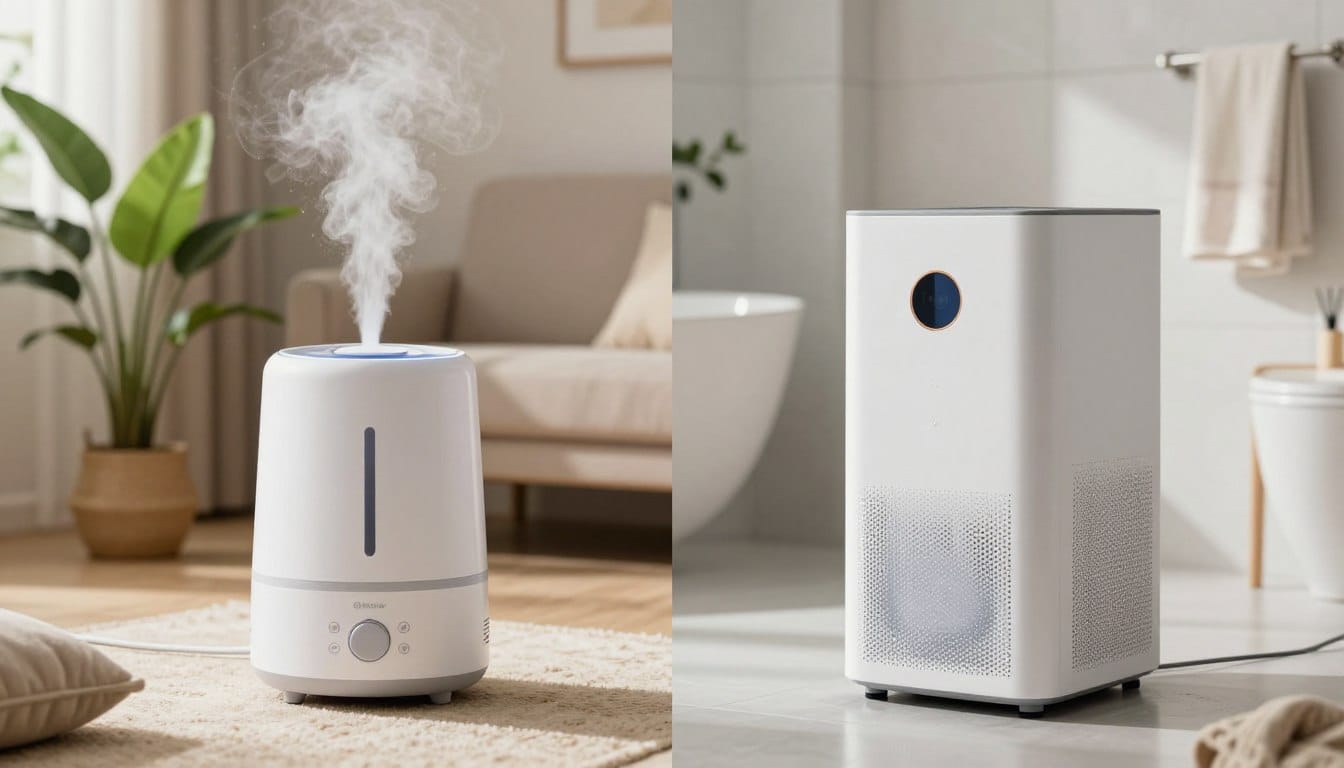
Creating a comfortable home starts with the air we breathe. Many struggle with indoor climate issues, often due to moisture levels. It’s key to keep humidity between 30% to 50% for health and home care.

Knowing the fundamental differences between humidifiers and dehumidifiers is crucial. Humidifiers add moisture to dry air, while dehumidifiers remove excess dampness. The right choice keeps your home comfortable, not uncomfortable.
By balancing your indoor atmosphere, you protect your furniture and improve health. This guide will help you choose the best option for your home.
Key Takeaways
- Maintain indoor humidity between 30% and 50% for optimal health.
- Use moisture-adding devices to combat dry air during winter months.
- Use moisture-removing units to prevent mold growth in damp areas.
- Proper climate control protects your home’s structural integrity and furniture.
- Selecting the right appliance depends on your local climate and specific room conditions.
Understanding the Core Differences in Humidifier vs Dehumidifier Technology
When you look at a humidifier vs dehumidifier, the main difference is how they handle water vapor. Both aim to keep your indoor air balanced, but they do it in opposite ways. Knowing how they work is key for anyone wanting better air and to protect their home.

How Humidifiers Add Moisture to Indoor Air
Humidifiers add water vapor to fight dry air. Ultrasonic models make a fine mist with sound waves. Evaporative systems use a fan to blow air through a wet filter. Both make the air feel better in cold weather.
How Dehumidifiers Extract Excess Humidity
Dehumidifiers, on the other hand, take moisture out of the air. They stop dampness and mold. Most use a fan to cool air, making water vapor condense and collect in a tank.
“The quality of the air we breathe indoors is directly tied to our ability to regulate the invisible moisture content surrounding us.”
The Role of Relative Humidity in Home Comfort
Relative humidity shows how much moisture is in the air compared to what it can hold. Warm air can hold more moisture than cold air. Understanding this helps you choose between a humidifier vs dehumidifier for your home.
Health Implications of Improper Indoor Humidity Levels
Finding the right balance in your home’s humidity is key to avoiding health issues. Too little or too much humidity can harm your body. Keeping humidity levels just right helps prevent sickness and keeps your home cozy all year.

Risks Associated with Dry Air Environments
Low humidity dries out your skin, causing discomfort and irritation. Your nose may feel dry, weakening your body’s defense against dust and germs. This can lead to dry lips and itchy eyes, especially in winter.
Respiratory Issues Linked to High Humidity
Too much moisture encourages mold and dust mites to grow. These allergens can settle in your lungs, causing coughs and wheezes. People with sensitive lungs are especially at risk.
Impact on Allergies and Asthma Triggers
For those with allergies, your home’s humidity is crucial. High humidity can make breathing hard, especially at night. By controlling humidity, you can beat humidifier vs dehumidifier issues and make your home healthier.
| Condition | Primary Health Risk | Common Symptom |
|---|---|---|
| Low Humidity | Dehydration of mucous membranes | Cracked skin and nosebleeds |
| High Humidity | Increased mold and mite growth | Wheezing and congestion |
| Balanced Air | Optimal respiratory function | Improved sleep quality |
Identifying Signs You Need a Humidifier
Dry indoor air often goes unnoticed until it starts to affect your health and your home. When humidity levels drop below 30%, your space can become uncomfortable and damage your belongings. Recognizing these early warning signs is key to keeping a healthy environment.
Physical Symptoms of Dry Air in the Home
The first signs of low humidity are often felt by your body. You might have persistent dry skin, chapped lips, or a scratchy throat in the morning. This is because the air takes moisture away from your body faster.
Also, dry air can cause increased sinus discomfort and irritated nasal passages. If you’re using eye drops or lip balm more in winter, your home might be too dry. Fixing this can make your daily life much better.
Damage to Wooden Furniture and Flooring
Wood in your home is very sensitive to moisture changes. When air is too dry, wood loses moisture and shrinks and contracts. This can cause cracks in hardwood floors, furniture, and even musical instruments.
If you see new gaps in floorboards or furniture joints getting loose, your air is too dry. Protecting your investment in wood pieces means keeping humidity stable. A humidifier helps prevent these changes.
Static Electricity and Its Causes
Getting shocked by static electricity often means your air is too dry. Static builds up more in dry air because there’s not enough moisture to discharge it. You might feel this when touching metal objects or your clothes.
Static can also attract dust and allergens more. Maintaining proper humidity levels helps reduce these charges. If you’re always getting zapped, your air needs more moisture.
Identifying Signs You Need a Dehumidifier
Knowing the signs of high humidity is key to deciding if you need a dehumidifier. Learning to beat humidifier vs dehumidifier confusion helps manage your home’s climate. Spotting these signs early can prevent damage and boost comfort.
Detecting Musty Odors and Mold Growth
A musty odor in basements, crawl spaces, or closets is a sign of too much moisture. This smell means mold or mildew is growing. If you smell this, your home’s humidity is too high.
Mold loves damp places and spreads fast if not stopped. Fixing this quickly is key for clean air and to avoid damage. A dehumidifier helps by removing moisture, making it hard for mold to grow.
Condensation on Windows and Cold Surfaces
Condensation on windows in cold months shows high humidity. Warm, moist air turns to water on cold surfaces. This can damage wood or paint.
Wiping windows often means your home needs better moisture control. Lowering indoor humidity stops condensation. This protects your windows and walls from moisture damage.
Pest Infestations Related to Dampness
Damp places attract pests like silverfish, centipedes, and cockroaches. They need humid air to live and breed. Seeing more pests means your home is too moist.
Lowering humidity makes your home less welcoming to pests. Choosing the right tool to beat humidifier vs dehumidifier issues helps keep your home dry and pest-free. Regular moisture control is a smart step for a cleaner, healthier home.
Key Features to Look for in the Best Humidifier
Finding the best humidifier for your home is about finding the right mix of tech and lifestyle needs. Every home is different, so knowing how these devices work is key to comfort.
Ultrasonic vs Evaporative Technology
Most humidifiers are ultrasonic or evaporative. Ultrasonic models are quiet, perfect for bedrooms or offices. But, they need distilled water to avoid dust in the air.
Evaporative units use a fan and filter. They’re easier to keep up and don’t spread as many minerals. Your choice depends on noise tolerance and water quality.
Capacity and Coverage Area Requirements
Choosing the right humidifier means matching its output to your room’s size. A small unit can’t raise humidity enough, while a big one can make too much moisture.
Check the manufacturer’s coverage area advice before buying. Proper sizing ensures even moisture without overloading your HVAC or causing damp spots.
Ease of Cleaning and Maintenance Features
Keeping your humidifier clean is crucial. Look for models with removable tanks for easy filling and cleaning under a faucet.
Also, choose units with dishwasher-safe parts for a simpler cleaning routine. Regular maintenance keeps the air clean and fresh all year.
Key Features to Look for in the Best Dehumidifier
When searching for the best dehumidifier for your home, look at several key specs. These specs affect how well the dehumidifier works over time. Knowing how these devices work is key to picking the right one.
Compressor vs Desiccant Dehumidification
Dehumidifiers work in two main ways. Compressor-based models cool the air to remove moisture, like refrigerators. They’re great for hot, humid places.
Desiccant dehumidifiers use a chemical to pull moisture from the air. They’re best for cooler spots like basements or garages. Picking the right type ensures your dehumidifier works well, no matter the temperature.
Energy Efficiency and Energy Star Ratings
Dehumidifiers run a lot, so energy use is important. Look for a best dehumidifier with an Energy Star rating. This means it uses less power and helps you save money on bills.
- Energy Star units use 15% less energy than others.
- They save you money on your electricity bill every month.
- They also help reduce your home’s carbon footprint.
Continuous Drainage Options and Tank Capacity
It’s important to manage the water a dehumidifier collects. Many have a removable tank, but some areas need a more automatic way to handle water.
Many top best dehumidifier models have a continuous drainage hose. This lets you send water straight to a drain or sink. If you don’t want a hose, look for a model with a big tank to cut down on emptying.
Top Rated Humidifiers for Residential Use
Choosing the best humidifier for your home is about finding the right mix. You want technology that works well and is easy to care for. The best units make your air cleaner and are simple to use every day.
Levoit OasisMist Smart Humidifier Analysis
The Levoit OasisMist is great because it fits well with smart home systems. You can change humidity levels with your voice or a mobile app. It’s perfect for homes that like the latest tech.
- Dual-sensor technology for precise humidity tracking.
- Top-fill design for effortless water tank refills.
- Quiet operation suitable for bedrooms and nurseries.
Honeywell HCM350 Germ-Free Cool Mist Review
The Honeywell HCM350 is known for its germ-free mist technology. It uses UV light to kill bacteria in the water before it’s released. This makes it a top pick for clean air.
“Maintaining clean, moisture-balanced air is essential for respiratory health, especially during the dry winter months.”
This model is great for those who want clean air. It keeps minerals out of your air and off your furniture.
Vornado Evap40 Evaporative Humidifier Features
The Vornado Evap40 is perfect for big spaces. It spreads moisture evenly, so you won’t get wet spots on your floors.
This unit is often called the best humidifier for open spaces. It holds a lot of water, so you refill it less often. This means your home stays comfortable all day.
Top Rated Dehumidifiers for Residential Use
Choosing the best dehumidifier means looking at how well it works, how much it can hold, and its design. These devices help keep your home dry and free from mold when it gets too humid. A good choice means your family will stay comfortable and breathe clean air.
Frigidaire 50-Pint Dehumidifier Performance
The Frigidaire 50-Pint model is known for its robust moisture extraction rate. It’s great for basements and big rooms where humidity often gets high. People like how it keeps the air dry, even when it’s really humid outside.
hOmeLabs 4,500 Sq. Ft. Dehumidifier Overview
The hOmeLabs unit is perfect for big spaces, up to 4,500 square feet. It’s designed to handle large areas well. Its big tank and airflow make it a hit with homeowners facing a lot of dampness.
Midea 50-Pint Cube Dehumidifier Design
The Midea Cube is special because of its innovative space-saving design. It fits inside its own water tank, making it easy to store when not in use. It’s great for those who want something that’s both effective and easy to manage.
| Model | Capacity | Key Advantage |
|---|---|---|
| Frigidaire 50-Pint | 50 Pints | High Extraction Rate |
| hOmeLabs 4,500 | 50 Pints | Wide Coverage Area |
| Midea Cube | 50 Pints | Compact Storage |
Choosing the best dehumidifier depends on your home’s size and storage needs. Each model offers exceptional value for homes. By looking at these features, you can pick the right one to keep your home dry and comfy.
Comparing Operational Costs and Energy Consumption
When you’re deciding between a humidifier vs dehumidifier, the cost of energy is key. Keeping your home comfortable without breaking the bank is a big challenge. It’s important to know how these devices affect your bills.
Electricity Usage of Humidification Systems
Humidifiers use less power than dehumidifiers. They work with a fan or a vibrating diaphragm to add moisture to the air. This method is very efficient and uses less electricity than cooling or heating systems.
They don’t need strong compressors, so they can run for a long time without using a lot of energy. Picking the right humidifier helps keep your home’s moisture right while saving on electricity.
Power Requirements for Dehumidification Units
Dehumidifiers, on the other hand, use more energy. They work like air conditioners, using a compressor to cool coils and pull moisture from the air. This process needs constant power to work well, especially in humid places.
Bigger dehumidifiers for basements or whole houses use more electricity than smaller ones. Look for Energy Star-rated models to get the most out of your energy.
Long-term Cost Analysis for Homeowners
When comparing costs, think about how often you’ll use it and your local energy prices. Dehumidifiers might cost more to run at first, but they prevent costly damage from mold and moisture. A good unit can save you money by protecting your home.
The choice between a humidifier vs dehumidifier depends on your climate needs. By watching your usage and choosing efficient options, you can control your energy costs and keep your home cozy.
Maintenance Best Practices for Longevity
Getting the best humidifier or a top-notch dehumidifier is just the start. To keep them working well, you need to stick to a regular maintenance plan. This not only makes your devices last longer but also keeps your air clean from harmful stuff.
Cleaning Protocols for Humidifier Tanks
The water tank is key to keeping clean. Rinse it with fresh water every few days to stop bacteria from growing. For a deeper clean, mix white vinegar and water to remove mineral buildup.
Let the tank dry completely before filling it again. This stops mold and mildew from spreading into your air. Regular care keeps your device safe and healthy.
Filter Replacement Schedules for Dehumidifiers
Dehumidifiers need clean filters to work right. A dirty filter makes them work harder, using more energy. Check your filter every 30 days to see if it needs cleaning or replacing.
If your dehumidifier collects less water or is noisier, check the filter. Replacing filters on time saves money and keeps your unit running smoothly. Keeping it clean is as important as picking the best humidifier for you.
Preventing Mineral Buildup and Bacterial Growth
Hard water causes mineral buildup in humidifiers. Using distilled water helps avoid white dust and scale. If you use tap water, clean the base and ultrasonic plates weekly to remove minerals.
Bacteria love damp, dark places. Empty your unit when not in use and keep it dry to stop bacteria. These steps keep your home comfy and safe all year.
| Maintenance Task | Frequency | Benefit |
|---|---|---|
| Tank Rinse | Every 3 Days | Prevents Bacteria |
| Deep Descaling | Every 2 Weeks | Removes Mineral Buildup |
| Filter Inspection | Monthly | Maintains Airflow |
| Full Replacement | Every 6 Months | Ensures Peak Efficiency |
Placement Strategies for Optimal Performance
Getting the right indoor climate is more than just buying the right appliance. It’s about where you place it. Even the best dehumidifier or the most advanced humidifier won’t work well if it’s hidden away. The right spot ensures your device can handle the air in your space.
Where to Position Your Humidifier
Humidifiers do best on a stable, elevated surface. A nightstand or sturdy table is perfect. This way, the mist spreads out evenly before hitting the floor. Make sure it’s not against walls to avoid moisture damage.
Don’t put your humidifier near electronics or wooden furniture. The mist can cause water spots or electrical problems. Place it where air can move freely to help moisture spread.
Ideal Locations for Dehumidifier Placement
Look for spots with too much moisture. Basements, laundry rooms, and bathrooms need humidity control. A central spot in these rooms helps the best dehumidifier catch damp air from all sides.
Keep it 6 to 12 inches from walls or big objects. This lets vents work well. In basements, make sure it’s on a level floor for better drainage.
Managing Airflow and Circulation in Large Rooms
In big rooms, air movement is key. Ceiling fans or portable fans help. They keep air moving, letting your devices work better.
Clear paths around your device. Avoid curtains or tall plants that block air. This helps your device sense humidity levels better, making it last longer and work better.
| Feature | Humidifier Placement | Dehumidifier Placement |
|---|---|---|
| Surface Type | Elevated and level | Floor-based and level |
| Wall Clearance | At least 12 inches | At least 6-12 inches |
| Primary Goal | Even mist dispersion | Maximum air intake |
| Best Environment | Living rooms or bedrooms | Basements or laundry areas |
Seasonal Considerations for Humidity Control
Your home’s moisture balance changes with the weather. To beat humidifier vs dehumidifier challenges, you need different tools for different seasons. This ensures your home stays comfortable all year.
Managing Winter Dryness with Humidifiers
In winter, central heating dries out the air. This causes dry skin, irritated sinuses, and damage to wood. Adding a humidifier helps restore balance and improves your health.
Combating Summer Humidity with Dehumidifiers
Summer brings high humidity, making your home feel damp. This moisture is perfect for mold and mildew. A high-capacity dehumidifier helps keep your home dry and comfortable.
Transitioning Between Seasons in Different Climates
Climate zones in the US vary, affecting your needs. In areas with big seasonal changes, you might switch between devices. Being ready to adapt is crucial for a healthy indoor climate all year.
Common Mistakes When Choosing Humidity Appliances
Choosing the right equipment is key to a healthy home. Many homeowners struggle when deciding between a humidifier vs dehumidifier. This can lead to buying the wrong thing for their needs. It’s important to know what you need to avoid wasting money and ensure comfort.
Over-humidifying Small Spaces
Putting a big unit in a small room is a common mistake. Too much moisture in a small area can make the air too wet. This can cause mold and mildew to grow on walls, windows, and furniture.
Always check the unit’s square footage rating before you install it. Using a humidifier vs dehumidifier right means picking the right size for your room. Also, make sure there’s good air flow to avoid air getting stuck.
Underestimating Dehumidifier Capacity Needs
Many people buy a unit that’s too small for their space. A small unit will run all the time without reaching the right humidity. This uses too much energy and can wear out the unit fast.
When choosing between a humidifier vs dehumidifier for a big, damp area, go for size over price. A slightly bigger unit will turn off more often. This keeps the air comfortable all year.
Ignoring Noise Levels in Bedrooms and Offices
Noise is often overlooked but it affects our daily life a lot. Loud units can disrupt sleep or make it hard to focus. When picking a humidifier vs dehumidifier, look for ones with a quiet mode or special sound-dampening tech.
It’s wise to test the unit in a quiet spot before you put it in your home. Choose units with adjustable fan speeds to keep the noise down. A quiet home is as important as clean air.
| Common Mistake | Primary Consequence | Recommended Solution |
|---|---|---|
| Oversizing Units | Condensation and Mold | Check square footage ratings |
| Undersizing Units | High energy bills | Select higher pint capacity |
| Ignoring Noise | Sleep and work disruption | Choose quiet-rated models |
| Poor Placement | Inefficient air circulation | Position in central, open areas |
Conclusion
Choosing the right humidity appliance is key to a healthy home for your family. You now know how to pick the best device for your home’s needs. This knowledge helps you understand what modern devices can do.
Buying top-notch equipment from brands like Levoit, Frigidaire, or Honeywell is a smart move. These devices keep your home stable and safe from moisture damage.
Keeping your device in good shape is crucial. Regular cleaning and the right placement help it work its best all year round.
Start improving your indoor air quality today. Look at your current home situation and pick the best solution for you. Your effort to create a balanced home environment will greatly improve your comfort and health.
FAQ
What is the primary functional difference in the humidifier vs dehumidifier comparison?
A humidifier adds water vapor to the air to fight dryness. On the other hand, a dehumidifier takes out extra moisture. Choosing the right one depends on your home’s humidity level, aiming for 30% to 50%.
How do I know if I need the best humidifier for my home?
If you have dry skin, irritated nasal passages, or static shocks, you might need a humidifier. Also, if your hardwood floors or wooden furniture are cracking, it’s a sign of dry air. Devices like the Levoit OasisMist Smart Humidifier or the Vornado Evap40 can help.
What are the telltale signs that I should purchase the best dehumidifier?
Look for condensation on windows, musty smells, and mold in corners or basements. Damp places also attract pests like silverfish. For these issues, consider the Frigidaire 50-Pint Dehumidifier or the hOmeLabs 4,500 Sq. Ft. Dehumidifier.
In the best humidifier vs dehumidifier debate, which appliance is more expensive to operate?
Dehumidifiers usually cost more to run. They use a compressor or desiccant system, which needs a lot of electricity. Humidifiers, on the other hand, use fans or ultrasonic vibrations. Look for Energy Star certified dehumidifiers to save money.
What is the difference between ultrasonic and evaporative technology in a best humidifier?
Ultrasonic humidifiers, like the Levoit OasisMist, make a fine mist quietly. Evaporative humidifiers, such as the Honeywell HCM350, use a fan and wick filter. They prevent over-humidification and are better for hard water areas.
Where is the ideal placement for these appliances to ensure optimal performance?
Place humidifiers on a level surface away from walls for better mist spread. Dehumidifiers should be in a central area with good airflow. For a basement, the Midea 50-Pint Cube Dehumidifier should be near a drain if using a hose.
Can improper humidity levels impact my respiratory health?
Yes, wrong humidity can harm your lungs and throat. Too dry air can irritate them, while too humid air can cause allergies and asthma. Using the right appliance is key to keeping air healthy.
How often should I clean my humidity control devices?
Clean humidifiers every few days with distilled water to avoid buildup. Dehumidifiers need less cleaning but check and clean air filters every 30 days. This keeps them working well.