
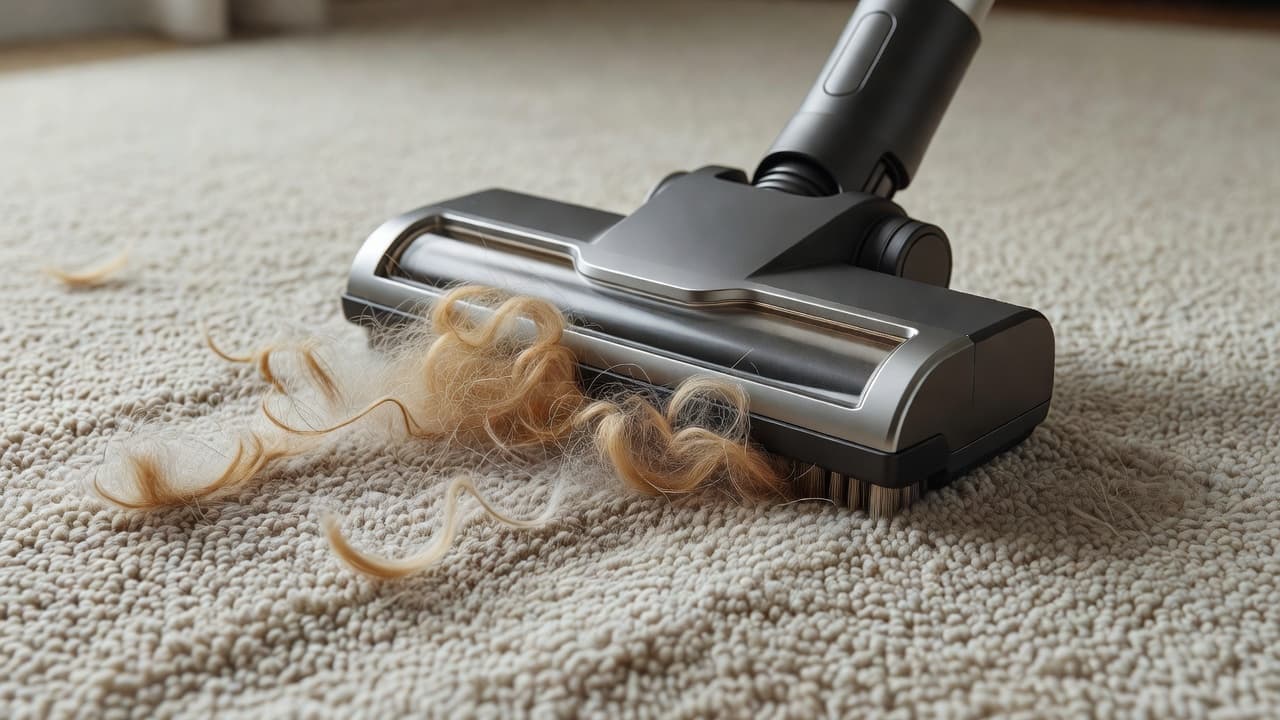
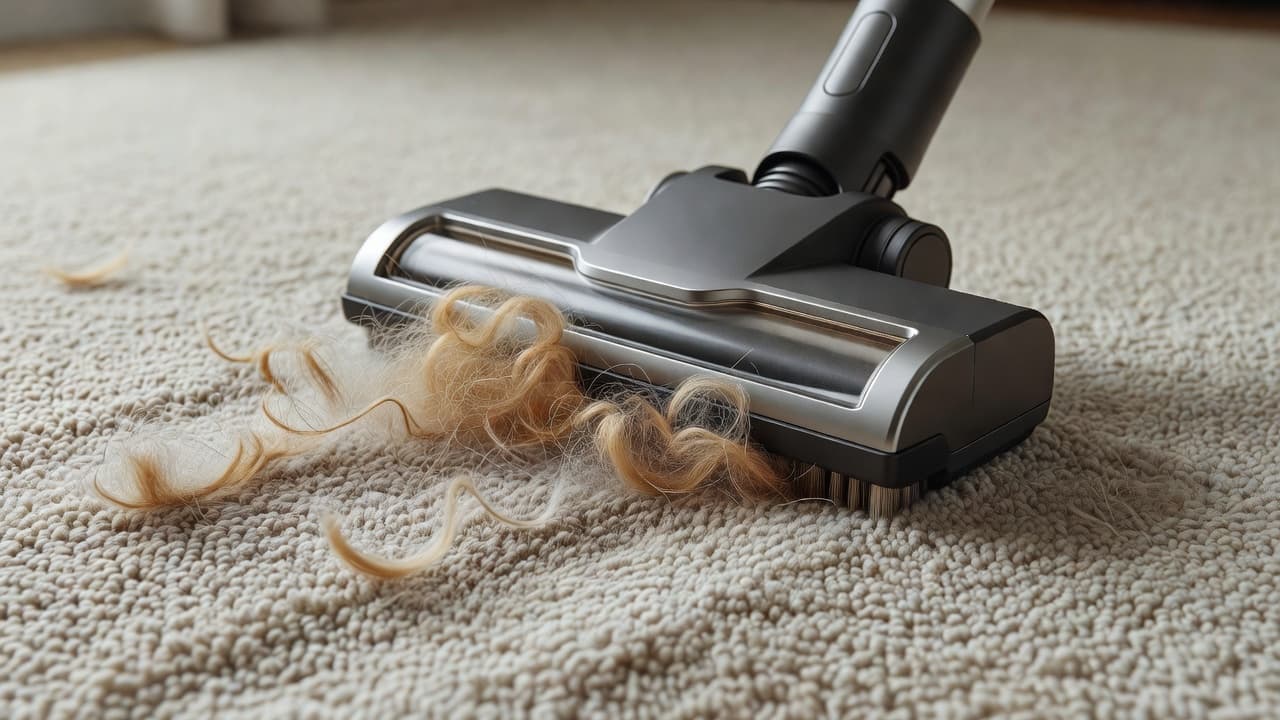
Pet hair is harder to clean than ordinary dust because it clings, wraps, and settles deep into fabric. It works into carpet, catches on rugs, sticks to furniture, and collects along stair edges where weak vacuums often miss it.
If you live with a dog or cat, the wrong machine fills too fast, tangles often, and leaves fur behind. This guide explains which features matter, how vacuum types compare, and how to choose a model that fits your home.
What to look for in the best vacuum for pet hair
Strong suction and a brush roll that grabs hair
Suction matters, but it is only part of the job. On carpet, the vacuum needs a brush roll that lifts hair from the pile. On furniture and stairs, a motorized tool often matters more than raw airflow.
Anti-wrap and tangle-resistant brush rolls are worth paying for in pet homes. Once hair coils around the roller, pickup drops and maintenance gets old fast. In independent pet-hair testing by RTINGS, floor-head design changes results as much as motor power.
Hair is easy to see, but dander is not. A HEPA filter can trap fine particles instead of blowing them back into the room. If someone in your home has allergies, that makes a real difference.
A sealed system matters too. If air leaks around the bin or body, even a good filter cannot do the whole job. Some vacuums also include odor or charcoal filters, which can help near pet beds, couches, and litter areas.
Tools that make pet cleanup easier
Most fur does not stay in the center of the floor. It gathers on couch arms, pet beds, car seats, stairs, and the gap between cushions. That is why the best vacuum for homes with pets needs the right tools.
A mini turbo brush or motorized pet tool helps pull hair off fabric. A crevice tool reaches baseboards and stair edges, while an upholstery brush is gentler on chairs and curtains. Tool storage on the machine is also useful, because it saves time.
Ease of use, weight, and bin size
A powerful vacuum is not much help if it feels exhausting to carry or awkward to steer. In multi-level homes, weight, hose reach, and swivel control shape how often you clean. A large bin or bag also helps when you live with heavy shedders.
Corded vacuums offer steady power for long sessions. Cordless models are easier for fast cleanup, but short run times and small dust cups can frustrate owners of large dogs. Hands-on picks from Reviewed show how wide that gap can be between convenient and capable.
The vacuum types that handle pet hair best
Upright vacuums for thick carpets and large spaces
Upright vacuums often work well in bigger homes with wall-to-wall carpet. They usually have wider cleaning paths and stronger brush agitation, so they can pull embedded fur from dense carpet better than lighter designs.
Their downside is bulk. An upright can feel heavy on stairs and harder to use under beds or low tables. Still, if carpet is your main problem, an upright often makes the most sense.
Stick vacuums for quick daily cleanup
Stick vacuums fit apartments, mixed flooring, and fast touch-ups between deeper cleanings. They are easy to grab after a brushing session, tracked litter, or shedding on the sofa.
Not every stick vacuum handles heavy pet hair well. Some are excellent on hard floors but weaker on thick carpet. If you have a large home or a long-haired breed, a stick model may work better as a daily tool than your only vacuum.
Robot vacuums for keeping fur under control
Robot vacuums help with daily maintenance, especially on hard floors and low-pile rugs. Better navigation keeps them out of trouble around cords, bowls, and furniture, and auto-empty docks cut down on bin handling.
They are still support tools in most pet homes. Robots do not clean stairs, upholstery, or thick carpet well enough to replace a full-size vacuum. They keep loose fur from building up, which makes main cleaning easier.
Canister vacuums for stairs, furniture, and hard floors
Canister vacuums are strong on stairs, hard flooring, and above-floor cleaning. Their wands reach under furniture more easily, and the separate body keeps the handle lighter in your hand.
Storage is the tradeoff. A canister has more pieces to move and park than an upright or stick. If you want to see how owners weigh bag size, odor filters, and long-term upkeep, this owner discussion on pet-hair vacuums adds useful context.
How to choose the right pet hair vacuum for your home
Match the vacuum to your flooring
Hardwood and tile need strong pickup with gentle contact. An aggressive brush can scatter litter or scratch a finish. Low-pile carpet is more forgiving, so many good uprights, canisters, and better stick vacuums can handle it well.
High-pile carpet and thick area rugs need more brush action and better height control. If your home mixes hard floors, rugs, furniture, and stairs, a canister or lift-away upright often gives the best balance.
Think about how much your pets shed
A short-haired cat may only call for quick daily cleanup and decent upholstery tools. A husky, retriever, or multi-pet home usually needs stronger suction, anti-wrap brushes, and a larger bin or bag.
Seasonal shedding changes the equation too. During heavy shed periods, weak vacuums clog faster and need more filter care. When hair output rises, maintenance demands rise with it.
Balance budget with long-term value
Lower-priced vacuums can work in small homes with hard floors and one light shedder. Problems show up when seals leak dust, tools feel flimsy, or hair wraps around the head every week. Time spent clearing clogs adds up.
Paying more makes sense when you need better filtration, stronger carpet pickup, or a machine built for years of use. The best value is the model that keeps up with your routine and does not turn every cleanup into a project.
Final thoughts
Pet hair is stubborn because it grips fabric and carpet more tightly than plain dust. Strong suction helps, but the right brush roll, good tools, solid filtration, and a design that fits your floors matter just as much.
The best fit is the vacuum you will use often, not the most expensive one on the shelf. Match the machine to your pets, your shedding level, and your home, and cleanup becomes far easier.